

The digital world is evolving faster than ever. Traditional search engines like Google are no longer the only gateways to information. AI-driven platforms such as ChatGPT, Gemini, and other generative engines are redefining how users discover content. This shift has given birth to a new concept known as Generative Engine Optimization (GEO) — the next evolution in the world of SEO & Content Strategy.
GEO focuses on optimizing content not just for search engines but for AI-driven generative systems that deliver summarized, context-aware, and conversational responses. In this new landscape, mastering SEO & Content Strategy means understanding how to make your content visible, relevant, and valuable in the age of generative AI.
Understanding Generative Engine Optimization (GEO)
Before diving deep, it’s crucial to understand what GEO actually means. Generative Engine Optimization refers to the process of structuring and crafting digital content so that AI-driven search assistants and generative engines (like ChatGPT, Perplexity AI, or Google’s SGE) can accurately retrieve, understand, and present it to users.
In simpler terms, GEO is to AI what SEO was to Google. Just as traditional SEO helps search algorithms rank content, GEO ensures that AI models recognize, cite, and generate from your content in meaningful ways. This makes SEO & Content Strategy more dynamic, creative, and data-driven than ever before.
Why Generative Engine Optimization Matters in Modern SEO & Content Strategy
The rise of generative AI has changed how users interact with information. People are now asking full questions instead of typing short keywords. They want conversational, context-rich, and personalized responses — not just a list of blue links.
This shift impacts SEO & Content Strategy in several ways:
-
Search behavior is conversational – Users phrase queries in natural language, so content must mimic that tone.
-
Visibility depends on AI comprehension – Generative engines don’t just crawl; they interpret meaning.
-
Authority is about credibility and clarity – Engines cite well-structured, high-quality sources that demonstrate expertise and trustworthiness.
In this new reality, Generative Engine Optimization (GEO) is the bridge between traditional SEO & Content Strategy and the AI-driven future of digital marketing.
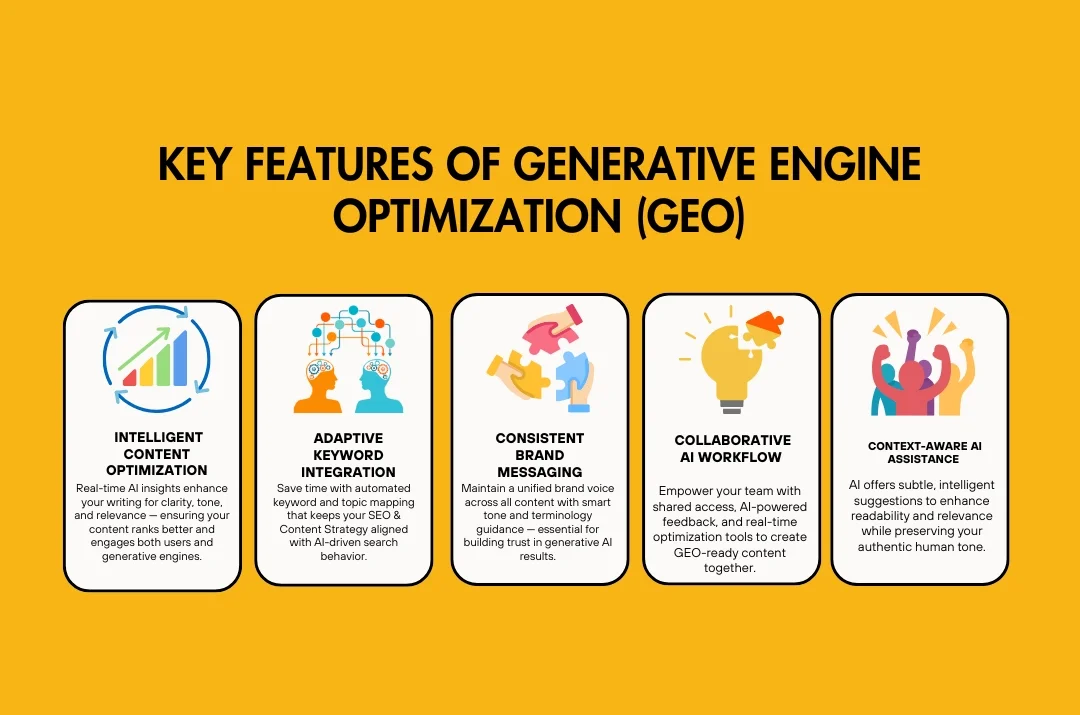
How Generative Engine Optimization Transforms SEO & Content Strategy
Let’s explore how Generative Engine Optimization GEO enhances the traditional SEO & Content Strategy framework.
1. From Keywords to Concepts
Traditional SEO revolves around keywords. GEO, however, focuses on semantic relationships and concept understanding. Generative engines prioritize meaning over matching exact terms.
That means when developing an SEO & Content Strategy, you need to write content that answers intent, not just queries. Using natural language, contextually rich explanations, and structured headings helps generative engines better interpret your expertise.
2. From Clicks to Citations
In a GEO-powered environment, AI assistants often summarize or rephrase content rather than display links. This makes brand citation and content attribution vital.
Your SEO & Content Strategy should now prioritize:
-
Citing original data sources
-
Including author bios and expertise
-
Structuring content clearly with factual accuracy
When generative engines pull from your content, proper structure ensures your brand remains visible and authoritative.
3. From Ranking to Relevance
Ranking on the first page of Google used to be the ultimate goal. Now, it’s about being referenced by AI as a credible source. That means content needs to be:
-
Structured logically (using schema and markup)
-
Written with clarity
-
Verified by authoritative references
Modern SEO & Content Strategy should focus on depth and trust, helping generative models see your content as a reliable data source.
4. From Static to Conversational Content
GEO also encourages brands to adopt a conversational tone. Instead of keyword stuffing, write content that feels human — mirroring how users talk. This helps generative engines easily summarize and quote your content in answers.
An optimized SEO & Content Strategy today must include:
-
FAQs
-
Long-form conversational guides
-
Question-based subheadings
These formats make your content more accessible to both readers and AI systems.
5. From On-Page SEO to Context Optimization
While traditional SEO emphasizes metadata, GEO extends optimization to context signals — like authorship, topical authority, and interlinked relevance.
Your SEO & Content Strategy should:
-
Build internal link networks
-
Maintain topical clusters
-
Use structured data to define entities
These techniques make it easier for generative models to interpret your content within its proper context.
Best Practices for Generative Engine Optimization (GEO)
Now that we understand its importance, here are the best practices to integrate GEO into your SEO & Content Strategy:
-
Write for Humans, Structure for AI
Your content should feel natural and valuable to readers while being technically optimized for AI parsing. Balance readability and data clarity. -
Focus on E-E-A-T (Experience, Expertise, Authoritativeness, Trustworthiness)
Generative engines prioritize verified, expert-driven content. Include author bios, credentials, and factual sources. -
Use Schema Markup
Add structured data to help AI understand entities, relationships, and context in your content. -
Leverage Semantic SEO Techniques
Focus on topic clusters and contextual keywords instead of repetitive keyword stuffing. This approach aligns with both GEO and modern SEO & Content Strategy. -
Keep Content Fresh and Factually Accurate
Generative engines prefer up-to-date, verifiable information. Regularly audit and update your site content. -
Encourage Mentions and Citations
Collaborate with reputable websites and sources so your content gets recognized as an authority in your niche.
The Future of SEO & Content Strategy in the Age of Generative Engine Optimization
As AI continues to reshape how people search and consume information, SEO & Content Strategy will evolve beyond optimization for algorithms — toward optimization for understanding.
Generative Engine Optimization (GEO) is not about replacing SEO; it’s about expanding it. The future will demand:
-
Content that’s discoverable by both search engines and AI assistants
-
Strategies that focus on conversational engagement and contextual accuracy
-
Brand positioning that ensures your content is cited, not just ranked
The marketers who adapt early to GEO principles will enjoy stronger visibility, credibility, and long-term audience trust.
Follow us on Instagram for daily Generative Engine Optimization hacks!

The era of Generative Engine Optimization (GEO) is here, redefining how we approach SEO & Content Strategy. As AI-driven engines become the primary gateways to knowledge, content creators must think beyond search rankings. They must create meaningful, trustworthy, and conversational content that AI systems can interpret and amplify.
By aligning your SEO & Content Strategy with GEO principles — emphasizing context, clarity, and credibility — you position your brand for success in the next generation of digital discovery. The future of visibility isn’t just about being searched; it’s about being understood and referenced by the intelligent systems shaping tomorrow’s internet.
Learn how AI transforms search in Google’s official Search Generative Experience guide.



: The Next Evolution of SEO & Content Strategy)
No comment