
In today’s fast-moving digital world, businesses can no longer rely on guesswork to attract customers or plan marketing campaigns. Every click, like, share, or purchase tells a story — and that story is written in data. But raw data alone isn’t enough. What truly matters is how we interpret it and turn it into actionable insights. That’s where AI powered predictive marketing comes into play — transforming complex data into real-time, intelligent marketing decisions.
What is AI Powered Predictive Marketing?
AI powered predictive marketing is the use of artificial intelligence and machine learning algorithms to analyze historical customer data and predict future behaviors. It’s like having a digital crystal ball that tells marketers what their audience is likely to do next — whether it’s making a purchase, clicking an ad, or leaving a website.
By using predictive models, marketers can anticipate customer needs, personalize campaigns, and make smarter marketing choices in real time. Instead of reacting to trends after they happen, businesses can stay a step ahead and create meaningful connections with their audience before they even ask.
Why Predictive Marketing Matters Today
Modern consumers expect personalization. They want brands to understand their preferences and deliver relevant experiences across every platform — from social media to email to e-commerce. Traditional marketing approaches often fall short because they rely on past performance rather than real-time intent.
AI powered predictive marketing bridges this gap by analyzing massive amounts of data quickly and accurately. It finds patterns in customer behavior, identifies emerging trends, and delivers insights that drive better decisions — all within seconds.
For example:
- An e-commerce brand can predict which products are likely to sell out next week.
- A travel company can identify customers most likely to book a trip during the upcoming holidays.
- A digital marketer can determine which ad creatives will get the highest engagement before launching them.
This predictive approach helps businesses save time, reduce ad spend, and increase ROI by focusing only on what truly works.
How AI Turns Data into Real-Time Marketing Decisions
Let’s break down how AI powered predictive marketing works in practice:
- Data Collection
The process begins with gathering customer data from multiple touchpoints — websites, apps, emails, social media, and even offline sources. This includes demographics, browsing history, past purchases, engagement rates, and more. - Data Processing and Analysis
AI systems then clean, organize, and analyze the data to identify hidden patterns. For example, it might detect that users who buy fitness products often search for nutrition supplements within a week. - Predictive Modeling
Machine learning models use this data to forecast future outcomes. These models constantly learn and improve, refining predictions based on new information. - Real-Time Decision Making
Once predictions are made, marketing platforms can automatically trigger personalized campaigns. For instance, if AI predicts that a user is likely to abandon their cart, it can send a special discount offer in real time. - Performance Optimization
Finally, AI continues to monitor results, adjusting campaigns automatically to maximize performance.
This continuous learning cycle allows AI powered predictive marketing to stay accurate, relevant, and incredibly fast.
Benefits of AI Powered Predictive Marketing
The advantages of integrating AI into marketing are endless, but here are some of the most powerful benefits:
1. Enhanced Personalization
AI enables brands to provide individualized experiences to each customer, even when reaching large audiences. It helps marketers tailor content, offers, and recommendations based on each customer’s interests and behavior.
2. Improved Customer Retention
By predicting when a customer is likely to stop engaging, brands can take proactive steps — like sending personalized emails or loyalty rewards — to retain them.
3. Smarter Budget Allocation
Predictive models help marketers identify which channels or campaigns deliver the best ROI. This ensures that every rupee spent on ads brings measurable results.
4. Real-Time Campaign Optimization
Instead of waiting for campaign results, AI can make instant adjustments — optimizing targeting, ad creatives, and bids based on live data.
5. Better Forecasting
AI helps marketing teams predict demand trends, seasonality, and market changes, enabling smarter planning and inventory management.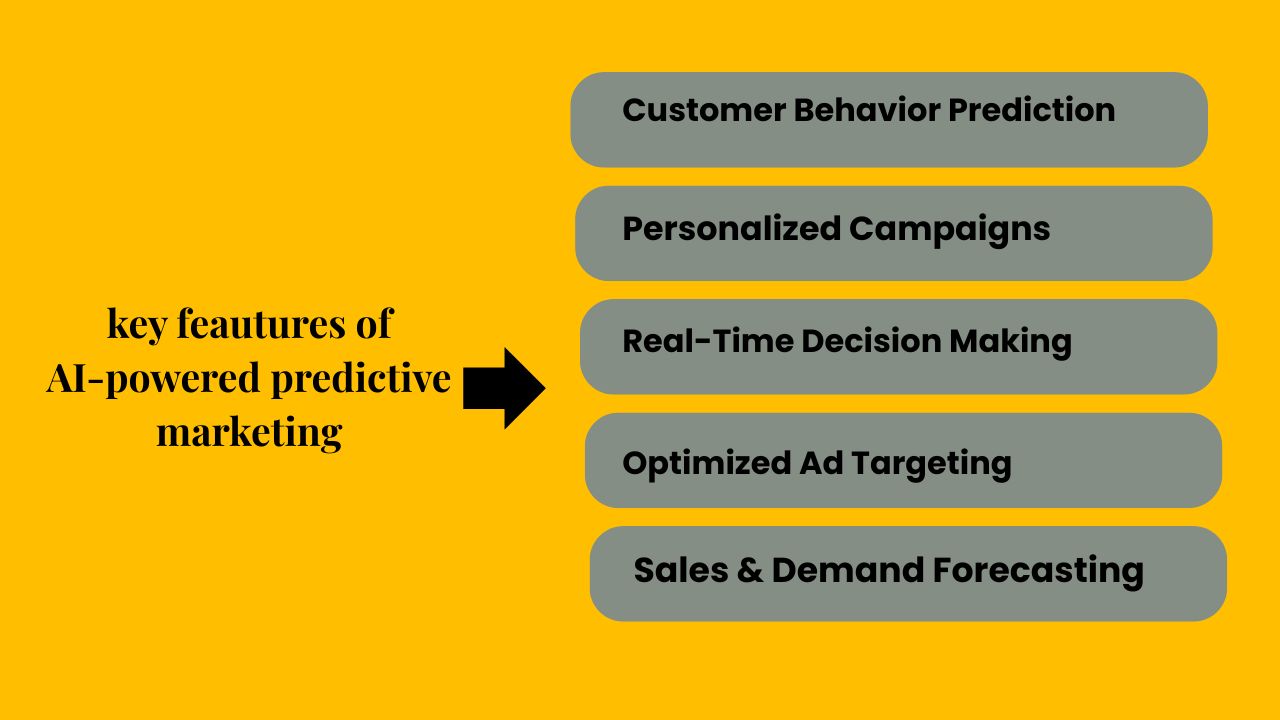
Practical Examples of Predictive Marketing in Action
- E-commerce: AI predicts which users are likely to purchase and automatically shows them product recommendations or limited time offers.
- Email Marketing: Predictive algorithms determine the best time to send emails and what subject lines will generate the highest open rates.
- Social Media Advertising: AI analyzes engagement data to forecast which posts will perform best and how to optimize targeting for maximum reach.
- Customer Service: Predictive models identify customers who might face issues and trigger proactive support messages before problems escalate.
These examples show how AI powered predictive marketing is not just a futuristic concept but a practical reality already transforming the marketing landscape.
The Human Side of Predictive Marketing
Even though AI plays the lead role, the heart of predictive marketing is still human understanding. Technology helps marketers work smarter, but empathy, creativity, and storytelling remain essential. The best results come when marketers use AI not just to automate, but to connect with real people in meaningful ways.
For instance, AI can tell you what your customers might want, but only human insight can decide how to present it in a way that feels genuine and emotional. Balancing data and creativity is what makes AI powered predictive marketing truly powerful.
Challenges and the Future of AI-Powered Predictive Marketing
Like any evolving technology, AI-predictive marketing comes with challenges — data privacy concerns, model accuracy, and the need for skilled professionals to manage AI tools. However, these challenges are rapidly being addressed as platforms become more transparent and user-friendly.
The future of marketing lies in AI-driven intelligence, where every marketing decision — from ad placements to customer communication — is powered by real-time data and predictive insights. As AI continues to evolve, it will empower even small businesses to compete on a global scale with smarter, faster, and more personalized marketing strategies.
Conclusion
AI powered predictive marketing is revolutionizing how businesses understand and interact with their audience. It transforms data into real-time, actionable decisions that drive growth, efficiency, and stronger customer relationships. By combining the analytical power of AI with human creativity, marketers can move beyond guesswork and make every campaign smarter and more impactful.
In short, AI powered predictive marketing isn’t just about technology — it’s about connecting data, decisions, and people in the most intelligent way possible.




No comment