
In today’s rapidly shifting technological landscape, businesses face an unprecedented need for speed, accuracy, and efficiency. Digital transformation is no longer optional—it is a competitive necessity. As organizations of every size work to streamline operations, improve decision-making, and enhance customer experiences, two concepts stand at the heart of this evolution: Automation and optimization. These twin drivers are reshaping entire industries by reducing manual effort, improving data accuracy, and enabling organizations to scale faster than ever before.
Over the past decade, automation technologies—from robotic process automation (RPA) to artificial intelligence (AI) and machine learning (ML)—have matured significantly. What once required large budgets and specialized expertise is now accessible to startups, mid-sized companies, and global enterprises alike. At the same time, optimization tools are helping teams refine workflows, reduce waste, and extract actionable insights from massive datasets. The result is a powerful synergy: automation reduces the time spent on repetitive tasks, while optimization ensures that the processes being automated are running at peak effectiveness.
Why Automation Is Becoming Essential
One of the driving forces behind the adoption of Automation and optimization strategies is the growing demand for real-time responsiveness. Modern consumers expect fast service, tailored communication, and seamless digital interactions. Achieving this manually is expensive and error-prone. Automation tackles this challenge by managing routine tasks such as data entry, customer onboarding, payment processing, and system monitoring.
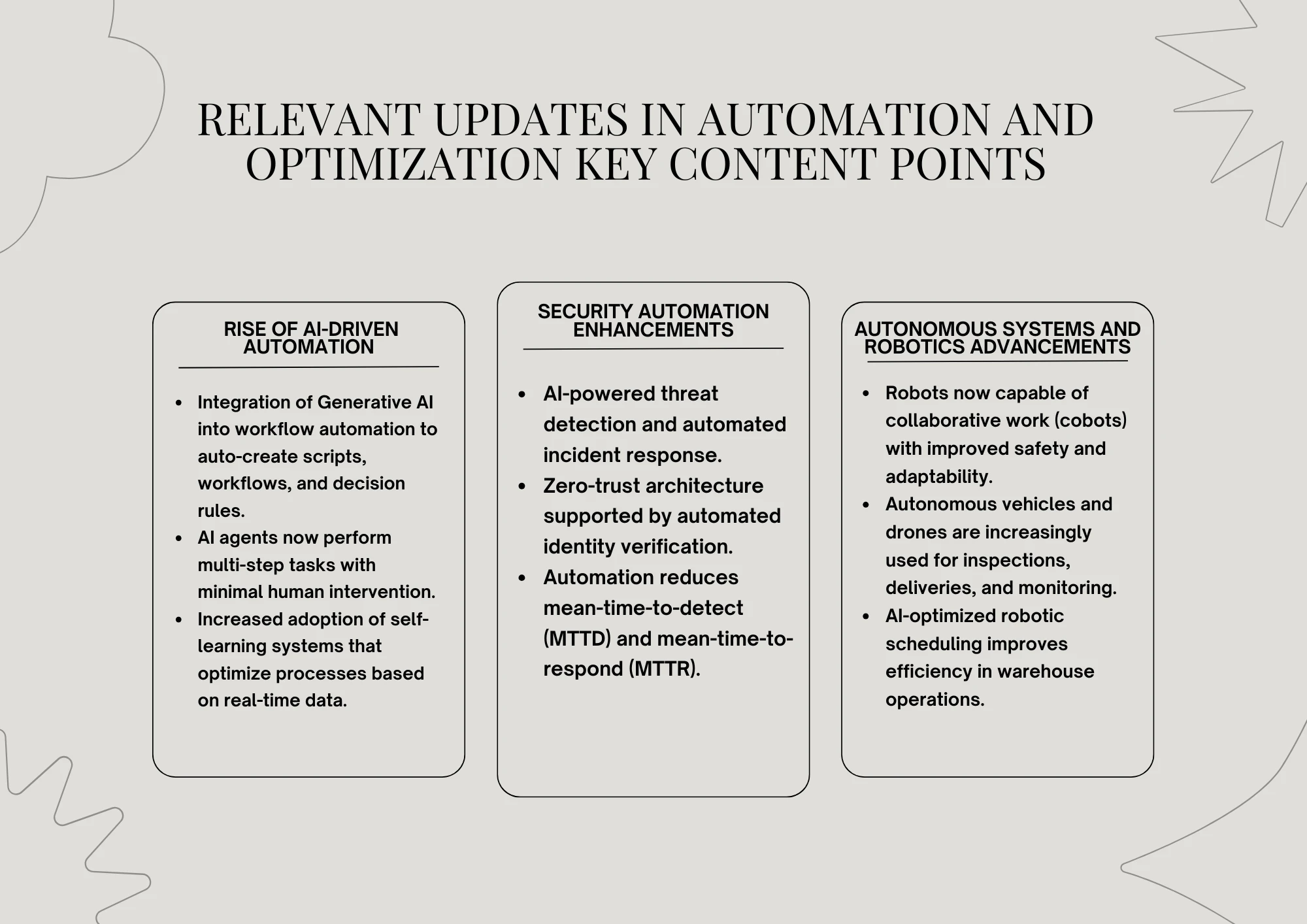
AI-driven automation is particularly transformative. With advancements in natural language processing, predictive analytics, and cloud-based platforms, businesses can now automate not only repetitive processes but also complex decision paths. Chatbots provide instant customer support; intelligent inventory systems adjust stock levels automatically; and financial institutions use automated fraud detection to identify suspicious activity within seconds.
As these technologies continue to evolve, the potential benefits extend far beyond cost savings. Automation improves employee satisfaction by reducing mundane work, encourages innovation by freeing teams to focus on strategic initiatives, and creates a more resilient operational foundation.
Follow me on Instagram for the latest insights, tips, and updates on Automation and Optimization!
Optimization: The Strategic Partner of Automation
While automation executes tasks, optimization ensures that the tasks themselves are designed for maximum efficiency. In this sense, automation and optimization work best together. Optimization analyzes data, identifies bottlenecks, eliminates redundancies, and highlights opportunities for improvement.
For example, a company may automate its customer service workflow, but without optimization, that workflow may still include unnecessary steps or poorly structured communication paths. When businesses pair optimization with automation, they create processes that are not only faster but smarter.
Modern optimization tools often leverage AI as well. Machine learning models analyze historical performance and predict future outcomes, enabling businesses to fine-tune operations continuously. Real-time dashboards allow managers to adjust strategies on the fly, improving everything from supply chain logistics to energy consumption patterns.
Latest Trends and Updates in 2025
The landscape of Automation and optimization is evolving rapidly, driven by emerging technologies and global economic pressures. As of 2025, several major trends are shaping the future of this field:
1. Hyperautomation
Gartner continues to highlight hyperautomation as a critical business trend. This approach extends automation beyond individual tasks, connecting entire systems, departments, and workflows into a unified automated ecosystem. Hyperautomation uses AI, RPA, low-code platforms, and process mining to eliminate inefficiencies across the entire organization.
2. Autonomous Operations
Industries like manufacturing, logistics, and energy are embracing autonomous operating models, where machines and software systems collaborate with minimal human intervention. For example, autonomous warehouses use robotic pickers, AI-driven inventory algorithms, and automated delivery drones, significantly reducing operational costs.
3. AI-Driven Optimization Engines
AI-powered optimization engines are enabling companies to simulate outcomes before making decisions. Digital twins—virtual models of real systems—allow organizations to predict system behavior, test improvements, and optimize processes without disrupting real operations.
4. Human-Centered Automation
Today, businesses are increasingly focusing on employee experience. Rather than replacing workers, companies are using automation to support them. Tools like AI assistants, workflow orchestrators, and augmented analytics platforms empower employees with enhanced decision-making capabilities.
5. Sustainability Through Optimization
Environmental sustainability is now a strategic priority. Optimization technologies help organizations reduce energy usage, lower emissions, and minimize resource waste. Automated monitoring systems offer real-time insights into environmental performance, supporting greener operational practices.
Challenges in Implementation
Despite its benefits, Automation and optimization come with challenges. Organizations often underestimate the cultural shift required to adopt these technologies. Employees may fear job loss or resist new workflows. Data quality issues can undermine both automation and optimization efforts, while legacy systems may be difficult to integrate with modern tools.
Successful adoption requires a thoughtful strategy:
-
Clear communication about goals and benefits
-
Training and upskilling for employees
-
Proper evaluation of technology vendors
-
Continuous monitoring and improvement
Importantly, businesses must align automation efforts with overall strategic objectives. Automating a flawed process will only magnify its inefficiencies; therefore, optimization should occur before and during automation rollout.
The Future of Digital Efficiency
As technology advances, the integration of Automation and optimization will become even more seamless. We can expect systems that not only automate workflows but also continuously self-improve, learning from patterns and adapting to new circumstances. The rise of quantum computing, expanded AI capabilities, and next-generation networking will accelerate this transformation.
Organizations that adopt a proactive, forward-looking approach will position themselves ahead of competitors. With well-implemented automation and ongoing optimization efforts, companies can improve productivity, enhance customer experience, reduce costs, and unlock new opportunities for innovation.

Conclusion
In an era defined by speed and digital interconnectedness, Automation and optimization have become fundamental pillars of business success. They empower organizations to do more with less, innovate faster, and respond to market changes with agility. By embracing these technologies—while staying updated with industry trends—businesses will not only thrive today but build a smarter, more efficient future.




No comment