
In today’s data-driven digital marketing world, companies constantly seek stronger signals to power their SEO & Content Strategy. Enter Clearbit AI — a platform that combines the best of B2B data enrichment and artificial intelligence to fuel smarter decisions. In this article, we will explore how Clearbit AI works, why it matters, and how it can integrate into your SEO & Content Strategy to boost visibility, relevance, and conversion. Drawing on real examples and strategic steps, you’ll come away with ideas you can apply yourself — not just theory.
What is Clearbit AI?
Clearbit AI refers to the evolution of Clearbit’s B2B data infrastructure into a more intelligent, AI-native data platform. Clearbit, long known for its robust data enrichment, firmographic and technographic attributes, and lead intelligence, has repositioned itself as an “AI Native Data Provider.”
clearbit.com
+2
https://zetta-xi.vercel.app
+2
With Clearbit AI, companies can:
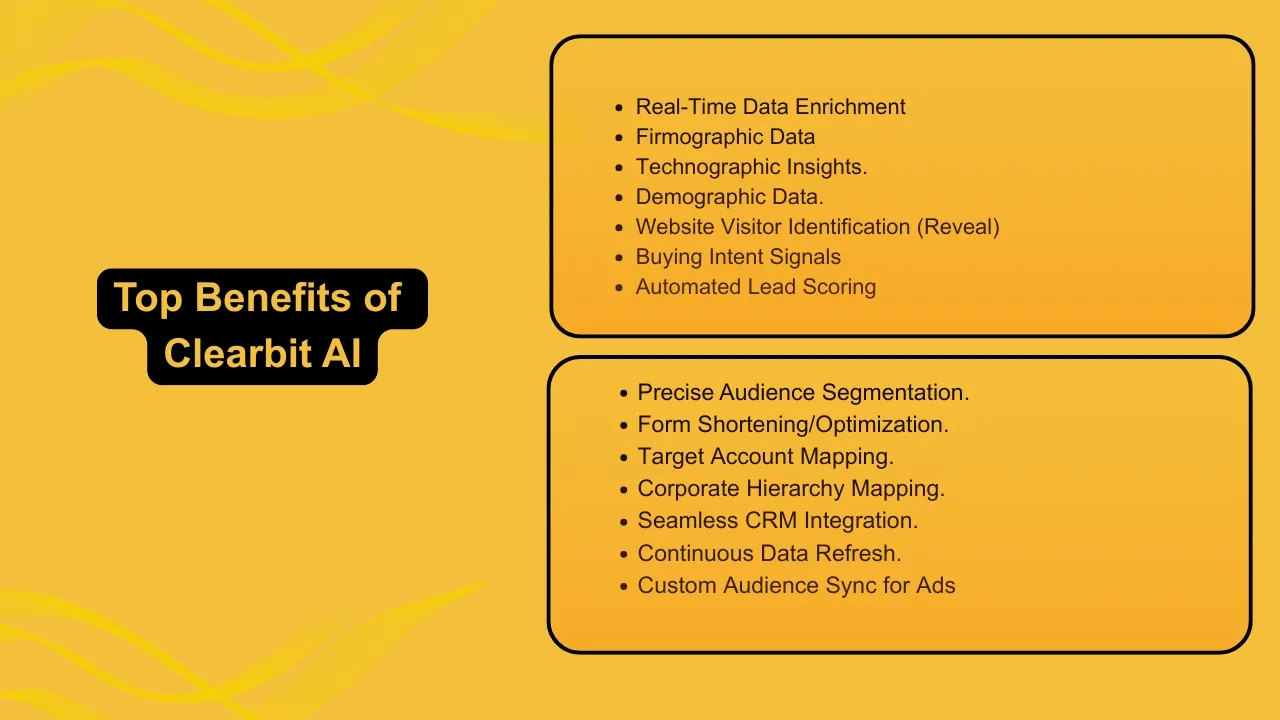
Enrich lead and contact records with 100+ B2B attributes in real time.
clearbit.com
+2
bardeen.ai
+2
Reveal buying intent and detect patterns using machine learning.
clearbit.com
+2
bardeen.ai
+2
Classify companies using AI-powered taxonomy, tagging them with accurate industry codes.
clearbit.com
Activate enriched data across CRMs, marketing automation platforms, and content systems.
clearbit.com
+3
clearbit.com
+3
bardeen.ai
+3
Clearbit’s architecture collects data from 250+ sources, applies AI/ML and verification, and continually refreshes records to maintain accuracy.
bardeen.ai
+2
clearbit.com
+2
So Clearbit AI is not just a static database — it is a dynamic, intelligence-driven engine that can power salesperson workflows, marketing segmentation, and content decisions.
Why Clearbit AI Matters for SEO & Content Strategy
If you are thinking SEO & Content Strategy, you might wonder: what role can a B2B data platform play in content? The answer is: a lot. Here are key reasons why Clearbit AI can be a lever for content performance and SEO:
1. Rich Insights to Inform Content Topics
One challenge in SEO & Content Strategy is choosing the right topics that resonate with your ideal audience. Clearbit AI can help you understand:
What industries, companies, or roles are already visiting your site.
What technologies companies use (technographic data).
What size, location, or vertical your best leads come from.
Armed with these insights, you can tailor content topics, keywords, and formats that align with your high-potential audience. That makes your SEO & Content Strategy more targeted and efficient.
2. Personalization at Scale
Clearbit AI enables dynamic content personalization. For example:
Show industry-specific case studies or messaging based on a visitor’s company profile.
Adjust calls-to-action or content modules based on firmographic attributes.
When your content feels more tailored, users engage longer and convert more. That improved engagement feeds back positively into SEO & Content Strategy, because search engines reward dwell time, lower bounce rates, and relevance.
3. Smarter Content Clustering and Internal Linking
In SEO & Content Strategy, grouping content into thematic clusters (hub-and-spoke models) is a best practice. Clearbit AI’s data can help you identify which segments of your audience are underserved in content, then help you structure clusters more intelligently. You can then weave internal links between relevant cluster pages, maximizing SEO benefit.
4. Intent Signals for Content Prioritization
Clearbit AI includes buying-intent signals. These signals can tell you when companies are in a buying cycle and which topics they may care about. If certain segments show strong intent around specific topics, you can align your content production to serve those needs. In other words, you can prioritize topics not just by search volume, but by business value. That synergy between data and SEO & Content Strategy can dramatically improve ROI.
5. Measurement and Feedback Loop
A strong SEO & Content Strategy relies not only on content publication, but on analyzing performance and iterating. Clearbit AI gives you a better view of who is converting, which company profiles have higher conversion rates, and how content performance differs across segments. This helps you refine your content plan based on real business outcomes, not just raw traffic.
How to Integrate Clearbit AI into Your SEO & Content Strategy
Here is a step-by-step approach to making Clearbit AI part of your SEO & Content Strategy:
Step 1: Define Your Ideal Customer Profile (ICP) and Segments
Begin by defining the types of companies and roles you most want to target. Use Clearbit AI to enrich your existing customer list, analyzing what firmographic, technographic, or behavior attributes your best customers share. That gives you a solid foundation for SEO & Content Strategy targeting.
Step 2: Audit Existing Content by Segment
Using the segments you uncovered, audit your content library: which segments are you already serving well (with high-performing content), and which segments are underrepresented? Tag your content pieces based on which segments they should serve. This coupling of content and Clearbit-based segmentation ensures your SEO & Content Strategy is audience-centric.
Step 3: Keyword Research with Segment Filters
Traditional keyword research is blind to company segments — but with Clearbit AI, you can filter or weight keywords by the segments you care about. For instance, if one segment uses a particular jargon or technology, you can prioritize those keywords in your content plan. This gives your SEO & Content Strategy a competitive edge.
Step 4: Topic Mapping and Clusters
Map topic clusters around high-value themes for your segments. For each cluster, produce pillar pieces and supporting “spoke” content. Use Clearbit AI data to decide which clusters to push harder — for example, clusters aligned with segments showing high buying intent should get more resources.
Step 5: Content Personalization & Dynamic Modules
Integrate Clearbit AI into your CMS or content delivery layer so that parts of your content (e.g. sidebars, CTA modules, case studies) adapt based on the visitor’s company profile. This level of tailored content delivery helps satisfy both users and search engines — a win in your SEO & Content Strategy.
Step 6: Monitor, Measure, and Iterate
Track which segments respond best to which content. Use conversion analytics, Clearbit-augmented attribution, and segment-specific performance metrics to assess the success of your SEO & Content Strategy. Adjust your content plan accordingly — double down where performance is strongest.
Step 7: Scale with Automation & AI Agents
Clearbit AI also supports intelligent agents that can assist with tasks like content personalization, segmentation updates, or even topic suggestions (via pattern recognition)
Relevance AI
+1
. As your SEO & Content Strategy matures, leverage these agents to scale without diluting quality.
Challenges and Best Practices
As with any advanced stack, integrating Clearbit AI into your SEO & Content Strategy has challenges. Here are some caveats and best practices:
Data privacy & compliance: Always ensure that using enrichment or personal data aligns with privacy regulations (e.g. GDPR, CCPA).
Avoid overpersonalization: Too many dynamic changes to content can confuse users or fragmentation your SEO signals. Balance dynamic modules with core static content.
Keyword balance: Don’t over-optimize for micro-segments to the point that your core SEO signal weakens. Keep your pillar SEO themes intact.
Content freshness: Even with enriched data, content must stay fresh. Update and iterate content to maintain high rankings.
Technical SEO hygiene: Rich content strategy aided by Clearbit AI is powerful, but you still need clean site structure, fast load times, mobile optimization, schema, etc., in your SEO & Content Strategy.
Real-World Use Cases & Example
To make the concept more concrete, here are example scenarios:
SaaS company targeting tech stack users: Suppose you’re selling a developer tool. Using Clearbit AI, you identify that many leads use a particular technology (e.g. Kubernetes). You build a content cluster around “Kubernetes best practices,” produce blog posts, guides, and case studies. You personalize homepage content to highlight those topics to visitors whose Clearbit profile matches that segment. That alignment between Clearbit data and your SEO & Content Strategy yields higher conversions.
B2B marketing agency: You enrich your site visitors with Clearbit AI, detect which visitors come from e-commerce vs. financial sectors, and tailor CTAs accordingly (e.g. “See ecommerce case studies” vs “See finance case studies”). Meanwhile, your content team plans cluster content for each vertical, optimizing SEO & Content Strategy by rising in search for keywords relevant to each vertical.
Enterprise targeting ABM accounts: Using Clearbit AI’s intent signals and enrichment, you know which accounts are getting research around certain topics. You produce deep content pieces around those topics, optimize them for those keywords, and deliver them as personalized content to those accounts. This tight coupling of account data and SEO & Content Strategy shifts your funnel to be more predictive and efficient.
–
Conclusion
In a crowded content landscape, simply producing content for general search volume won’t cut it. You need precision, personalization, and alignment with business goals. Clearbit AI empowers marketers and content strategists to inject intelligence, data, and intent into their pipelines. By enriching profiles, revealing intent, and enabling dynamic delivery, Clearbit AI gives your SEO & Content Strategy the edge it needs to break through.
If you adopt Clearbit AI wisely—layer it into your content planning, personalization, and analytics—you can move beyond “traffic for traffic’s sake” and toward a content ecosystem that truly drives growth, not just pageviews.

“See the official Clearbit website for detailed AI capabilities.”
Follow us on Instagram for daily Clearbit AI!




No comment